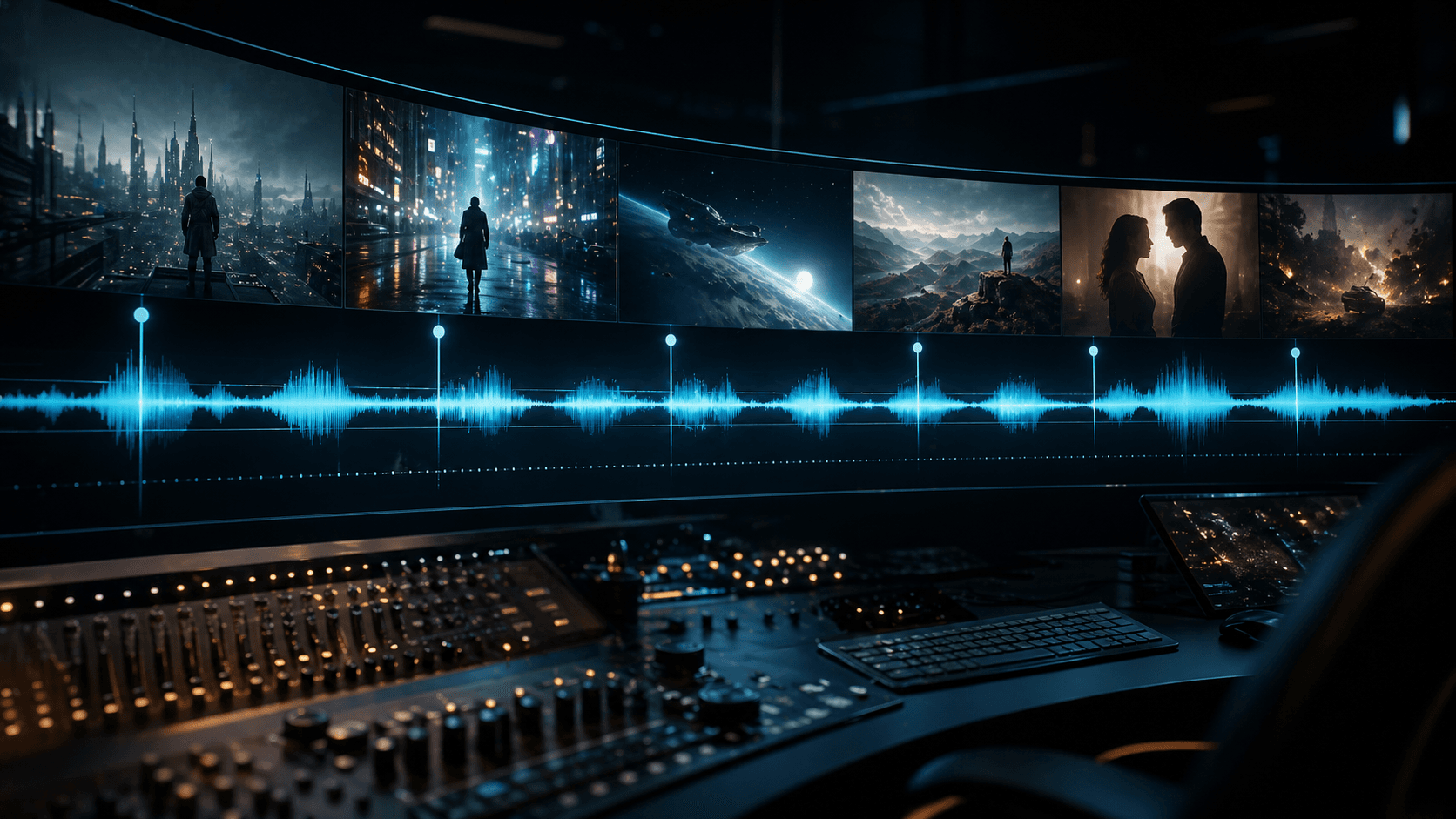
If you have ever watched a video where the music swells exactly as the drone shot reveals a landscape, or drops right as a beat lands on a cut, you have seen video scoring. It is the difference between music that happens to be playing and music that feels like it was made for the footage.
Traditional video scoring requires a composer, someone who watches your edit and writes music timed to it. That has been expensive and slow, accessible only to films and high budget productions. AI video scoring changes this by bringing the same workflow to every creator.
How Video Scoring Differs from Background Music
Background music is music you add to a video. It plays. It might match the general mood. But it does not respond to what is happening on screen.
Video scoring is music that responds to the edit. The intensity rises as the action rises. It drops when dialogue enters. It shifts mood when the scene changes. The music and the video feel like a single piece of content, not two things that happen to be playing at the same time.
Think of a movie trailer. The music in a good trailer does not just set a tone, it builds, hits on key moments, drops during dialogue reveals, and swells for the title card. That is scoring.
The Technical Process of AI Video Scoring
AI video scoring follows a multi step pipeline that mirrors what a human composer would do:
Step 1: Video Analysis. The AI watches your video and extracts: duration, scene cuts, dialogue density, emotional arc, camera movement, existing music, on screen text, color palette, and pacing. It builds a structured description of what happens and when.
Step 2: Prompt Construction. Based on the analysis, the AI writes a music generation prompt. This prompt includes genre recommendations, mood changes per scene, tempo matching, dialogue aware constraints (instrumental only, no vocals in dialogue sections, frequency space left for speech), and structural alignment with the edit's pacing.
Step 3: Music Generation. The prompt is sent to a music generation model, which produces the audio. The output is typically 30 to 180 seconds of instrumental music.
Step 4: Safety Verification. Before delivery, the generated audio is fingerprinted against a copyright database to confirm it does not match any existing copyrighted song. This is the step most AI music tools skip, and it is the most important one for creators.
When to Use Video Scoring vs When to Use a Library Track
Use video scoring when: the pacing of your edit matters (action sequences, montages, trailers), dialogue is dense and music needs to duck intelligently, the emotional arc has distinct scenes with different moods, or you cannot find a stock track that fits.
Use a library track when: the music is purely background ambiance, the mood is consistent throughout, the edit is simple and does not need beat matched changes, or you find a stock track that fits perfectly.
Most creators use a mix: library for quick background music, AI scoring for edits where fit matters.
video scoring / video editing / soundtrack / music for video / editor guide
AI Music for Original Soundtracks: The Complete 2026 Guide
NextWhat Is Stem Separation? How AI Splits Songs Into Isolated Parts
Frequently asked questions
Do I need to be a musician to score my videos?
No. AI soundtrack tools like Tonr handle musical composition from a prompt. You describe the mood, genre, tempo, and instrumentation, then generate a track you can adjust or regenerate if the first take is not right.
How long does AI video scoring take?
Total time from uploading a 3 minute video to receiving a scored soundtrack is typically under 90 seconds. Video analysis takes 15 to 30 seconds, prompt construction is immediate, music generation takes 30 to 60 seconds, and copyright verification takes seconds.
Can I edit the music after it is generated?
Yes. Tonr provides full stems for Pro users, separate audio tracks for drums, bass, melody, vocals, leads, and SFX. You can adjust the mix, mute elements, or bring parts forward in post production, just like working with a composer's master stems.
Is AI scored music copyright safe?
Yes, when verified. Tonr fingerprints every scored track against 70 million copyrighted songs before delivery. Since AI generated music is original, it has no existing copyright fingerprint and cannot trigger Content ID claims on any platform.