What is Video Scoring?
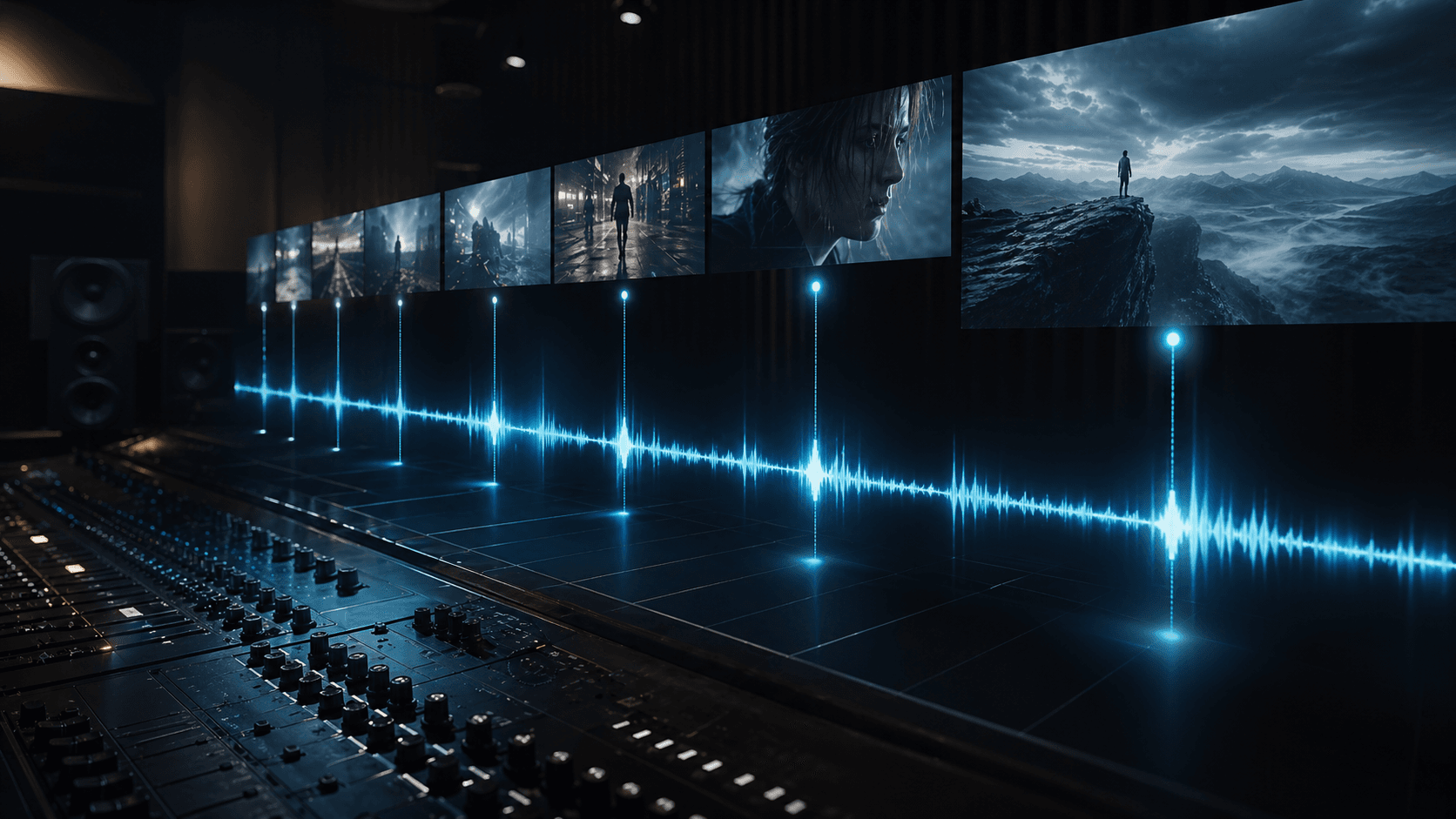
Video scoring is the craft of composing or selecting music that is synchronized to a specific video edit, matching the pacing of cuts, the emotional arc of scenes, and the rhythm of the footage. Scored music responds to what is happening on screen rather than simply playing underneath it.
How Video Scoring Works
Traditional video scoring involves a composer watching the edit and writing music timed to hit specific beats. The composer notes where key moments happen, a cut, a reveal, a dialogue pause, and structures the music to land on those moments.
AI video scoring automates this process. The system analyzes your video (detecting scenes, cuts, dialogue density, emotional tone, camera movement), constructs a music generation prompt tailored to the footage, generates the track, and delivers a scored result in under 90 seconds.
Scoring vs Background Music
Background music is music you add. It plays. It might match the general mood, but it does not respond to what is happening on screen. Scoring is music that responds. The intensity rises with the action. It drops when dialogue enters. The mood shifts when the scene changes. The music and video feel like one thing.
Tonr's video to music workflow is a scoring tool: upload a video, get back music that matches the edit. It detects dialogue and keeps the music out of the way. It adjusts mood across scenes. It builds to your cuts.
video scoring / soundtrack / music for video / AI scoring / video editing